When you spend every day elbow-deep in nurturing students, monitoring progress, keeping up with admin, while still trying to have a life of your own, if you don’t have the proper safeguards in place, you’re at risk for teacher burnout.
Teaching is one of the most physically, mentally, and emotionally challenging professions. And the expectations are endless!
The job isn’t getting any easier, which makes it all the more important to have a plan to proactively combat burnout symptoms as soon as you notice them.
I know you care about the work you do. And that’s admirable.
But it’s important to be able to do it in a way that doesn’t lead to emotional exhaustion. Let’s discuss what that looks like and how you can take steps to avoid educator burnout.
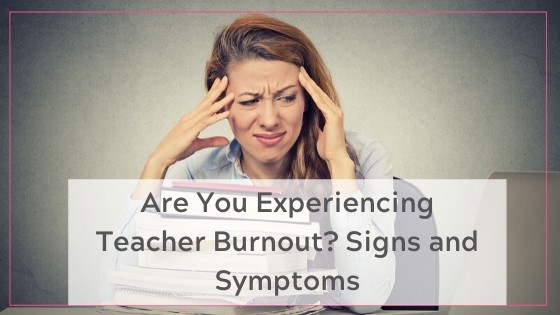
What is Teacher Burnout?
That’s a great question. Teacher burnout is what happens when chronic stress has gone on so long that you can no longer recover between demands.
Then, the problem goes beyond feeling tired or overwhelmed. You may feel emotionally drained, detached from students, less patient, and unable to cope with basic job tasks. Work can start to feel pointless, and even small decisions can feel hard.
Burnout also affects the body, so headaches, poor sleep, and constant exhaustion can show up alongside the mental load.
The American Psychological Association’s definition of burnout is ‘extreme work-related stress, categorized by emotional, psychological, and physical exhaustion’, and says that it’s a ‘modern-day epidemic in the teaching profession’.
One of the biggest challenges that teachers face isn’t so much that it’s a sudden onset. It’s that teachers are too busy to notice the more subtle signs of chronic stress that ultimately lead to burnout.
Often, you might be experiencing symptoms, like extreme exhaustion or headaches, or you might pick up every ‘bug’ going around.
Then, you think that if you just ‘push through’, or you can just make it to the next set of school holidays, you’ll be ok.
TAKE THE TEACHER BURNOUT QUIZ HERE – TO FIND OUT IF YOU’RE IN THE DANGER ZONE!

The Signs and Symptoms of Teacher Burnout
The signs of teacher burnout can be very different for everyone.
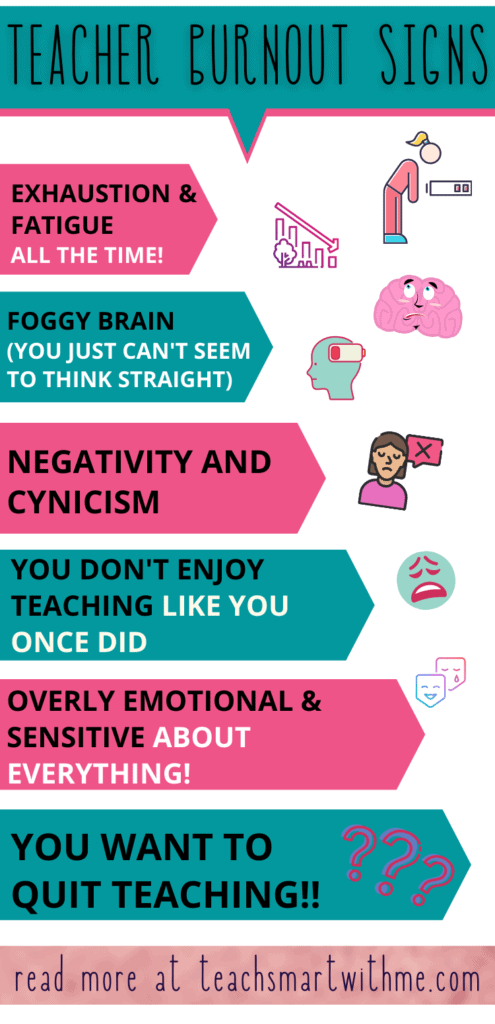
For me, these symptoms approached by stealth. They all seemed both related to teaching, but somehow not related to each other. But when you know what to look for in the case of teacher burnout, it’s clear what was happening to my body and mind.
These were my personal teacher burnout symptoms:
- Foggy Brain – I couldn’t think clearly, lost my train of thought
- Negativity – I wasn’t experiencing joy in teaching anymore, and it was easy to get pessimistic about things in the classroom
- Wanting to quit teaching – That constant, nagging voice that crops up, saying, ” I just can’t do this anymore.”
- Being overly emotional – Crying over small things, anxiety that manifested as anger
- Irritability – Easily set off by things that shouldn’t have been that big of a deal.
- A diagnosis of depression and/or anxiety – Lack of energy, interest in life, being overly worried, and all of the other things that come along with it.
- Sleep problems – Insomnia, in my case, although for some, it can also be sleeping too much.
- Getting sick all the time – This is a sneaky one, because we are always exposed to germs as classroom teachers, but when it feels constant, it can be a sign of chronic stress and burnout
- Exhaustion. All. The. Time.
These are what showed up for me, and you might see them in your colleagues too, SO TAKE NOTE…
Disclaimer: I’m not a medical practitioner. If you are experiencing any signs of burnout, seek professional medical advice immediately.
My Story of Teacher Burnout
I went through a massive burnout that left me with some serious mental health concerns. Through my experience, I discovered some of the major steps that I needed to take for more positive results in my teaching career.
Recognise the Signs to Reduce the Risk of Teacher Burnout
There were plenty of signs that I was burning out. They’re easy to see now, but at the time, I convinced myself that I just needed to push through.
It’s easy to tell yourself things like:
“I’ll be fine.”
“I just need to make it to the holidays.”
“I can handle it.”
Because that’s how I felt, too. But the truth is, your body has a way of sounding the alarm when something is wrong.
In my case, the stress was taking over my life.
Drowning in negativity.
Constant irritability.
The never-ending emotional overwhelm.
Every single day, dragging myself to school became harder and harder. I couldn’t switch my brain off when I finally DID get home. I would replay situations over and over in my head, and eventually it started affecting my sleep too.
Almost every afternoon, I would come home crying to my husband, telling him I couldn’t do it anymore.
Part of me felt like I had to keep going. Like being a “good teacher” meant sacrificing myself for everyone else. I cared more about my students, my responsibilities, and what people might think of me than I did about the fact that I was drowning in one of the most stressful professions without the proper support in place.
And if you’re a teacher, maybe you feel this too, from time to time.
The Shift
I don’t recall exactly how I was introduced to the concept, but I learned about self-care. And what a difference that made! When most people hear this term, they might automatically think about things like baths and “little treat” culture, and otherwise superficial things.
But I want to challenge you that self-care goes far beyond that. (Although a self-care bath IS a really nice thing every now and then!)
Self-care for teachers must absolutely be an essential part of our daily lives. And a full self-care plan includes things that nurture you on all levels.
- Physical self-care: Includes things like good hygiene, regular health checkups, good sleep, and moving your body
- Mental self-care: Finding time for your brain to actually fully rest from work
- Emotional self-care: Processing the stress that you’re under and finding healthier outlets
- Social self-care: Creating quality time with friends and loved ones
- Spiritual self-care: Connecting spiritually, whether through a religion, spirituality, or nature, to a higher purpose
The hard part about teaching is how easy it is for personal neglect to happen. You’re exhausted from your job, you don’t have a lot of personal time, and you still have the demands of home and family life.
But implementing a strong self-care routine can make a massive difference in your ability to function. It will also help you to fight off the negative effects of chronic stress from teaching.
One important note: Your self-care MUST continue, even after you start to feel better. It’s as essential as brushing your teeth. Your self-care needs regular attention, or you’ll see the stress symptoms creep back in throughout the school year.
Burnout in the Teaching Industry
The statistics on teacher burnout don’t lie – 65% of the teachers that were surveyed showed signs of burnout, and 20% were at risk of burnout.
Wow! Scary statistics!
Obviously, something needs to change if teachers are going to avoid burnout.
The bad news? Public school teachers can’t do much, if anything, about staff shortages, teacher shortages, the need for higher salaries, or the generally high demands of this profession.
The good news? There’s more that is within our control than you may realize! It will require making serious changes, and it will take practice, but it can keep additional stress from creeping into your personal life.
Are you in the BURNOUT DANGER ZONE? TAKE THE QUIZ to find out!
How to Combat Teacher Stress So It Doesn’t Turn Into Burnout
If you’re noticing physical symptoms of burnout starting to creep in, or the long hours of grading are overtaking your personal time, there are some things you can do to alleviate the negative impacts of burnout. I’ve tried all of these in addition to regular self-care, and I can tell you, they make a difference.
Creating Strong Boundaries
One of the biggest reasons that K-12 teachers suffer from higher levels of burnout is that there are fewer and fewer built-in boundaries between work and personal time. Technology has only made this worse.
Having to constantly be available to parents and guardians can lead to mental exhaustion. This isn’t even to mention things like taking work home to grade because you’ve had to give up prep periods.
One of the first and most important steps you should take is to start creating clear boundaries between your personal life and your professional life. This can look like:
- Creating a hard stop to your workday and not taking work home with you
- Taking weekends off
- Creating clear communication expectations and conveying them to parents and caregivers
- Having strong boundaries around social media when it comes to parents/caregivers and students
- Working smarter during your work hours to get more done
Even by starting with just ONE of these ideas, you’ll see the difference it makes in your free time. Excessive workloads will always be there. But it doesn’t mean you have to spend all of your time in a crisis reaction, trying to get it all done.
Practicing Work-Life Balance
Most of the boundaries listed above already contribute to a healthier work-life balance. However, being intentional with boundaries and using best practices for things like being efficient with administrative tasks can also make a difference. Some other ways to practice work-life balance include:
- Have a reset routine at the end of the day to switch your brain from work to home
- Find a relaxing hobby to enjoy that doesn’t have to do with teaching or being a caregiver
- Create a culture of support in your personal life so you know that you don’t have to carry it all alone
These are some of the best ways for teachers to support themselves and detach from a stressful school day.
Working Smarter as a Teacher
When you’re in a state of teacher exhaustion, hearing something like “working smarter” can make you want to roll your eyes and get back to the grind. But as someone who has been there, I can tell you for sure that there are probably at least a few tweaks that you could make that would help. These might be things like:
- Having a solid classroom management plan to curb any unwanted student behaviour
- Reusing lesson plans and creating your own library of resources
- Protecting your physical health by using sick time when needed, or having a plan to protect your voice in the classroom
- Having generalized plans for substitute teachers to step in when needed so you don’t have to stress about taking a day off
There are lots of little things that teachers can do to simplify tasks and free up time in the classroom. And once you get your systems humming, both your job satisfaction and student success will see great results.
Change Your Mindset
I know. This one is annoying. Zig Ziglar is quoted as saying, “The more you are grateful for what you have, the more you will have to be grateful for.” And I find that this applies to a lot of things. Gratitude is an exceptional practice, and we can also find good in other ways, too. Changing your mindset can happen by:
- Practicing teacher affirmations
- Making time for lighthearted laughter
- Reframing beliefs to neutralize negativity
There are so many things you can do to improve your mindset, and this is a huge area that you have control over.
Teacher Burnout Doesn’t Have to Be a Career-Ender
I’ve spent enough time talking to great teachers to know that burnout isn’t the end of the road. Public education can definitely be a grind. But you don’t have to hop in the grinder.
Yes, there will always be high expectations (and there should be!), and there will always be a need for systemic changes to help teachers be more successful, but taking control of the things that you CAN change will help you feel more empowered and fight back against the chronic stress of teaching.
It takes work to create positive change in your life, but whether you want to rekindle your love for teaching, or pursue a different career, the skills you cultivate to overcome the stress you’ve endured as a teacher will create a solid foundation for your next chapter.
TAKE THE TEACHER BURNOUT QUIZ HERE:
Take care, my friend,
Michelle x
Other Articles You Might Like:
- How to Reduce the Mental Load of Teaching and Ease Stress
- 9 Quick Wins to Boost Teacher Energy, Naturally
- The Top 10 Things You Shouldn’t Say to a Teacher [To their face, anyway!]
- Mindset Shifts for Teachers: Important Growth for Educators
- Exposing 12 Self Care Myths: Important for Teachers to Know
PIN THIS FOR LATER!




Leave a Reply